
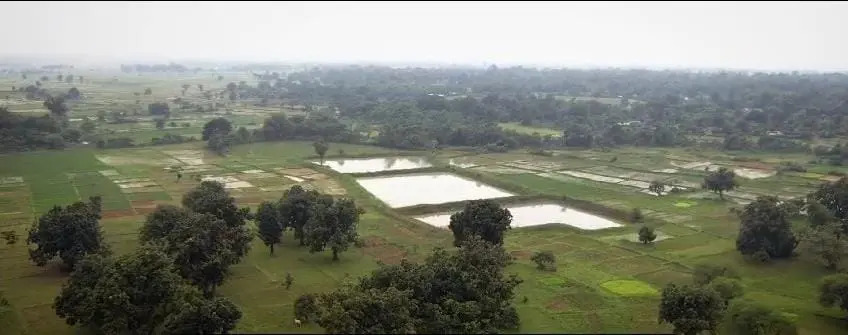
The Tata Steel Foundation has successfully constructed 243 ponds across the Kalinganagar region of Odisha over the past five years, significantly enhancing water security, groundwater recharge, and agricultural productivity in the area. The large-scale initiative covers 28 Gram Panchayats and forms a key part of the Foundation’s long-term commitment to sustainable development and environmental conservation.
Implemented across the Danagadi and Sukinda blocks of Jajpur district, the programme focuses on creating durable water harvesting structures that capture and store rainwater for year-round use. Out of the total ponds constructed, 139 are located in Danagadi block while 104 have been built in Sukinda block. These ponds are strategically designed to recharge groundwater and provide reliable irrigation to farmlands, particularly during dry and water-scarce periods.
According to Tata Steel Foundation, the initiative has already shown tangible benefits for local communities. In the current financial year alone, the Foundation has completed 59 new ponds, including 27 in Danagadi and 32 in Sukinda, further expanding access to sustainable water resources in the Kalinganagar impact zone.
Speaking on the initiative, Debanjan Mukherjee, Head of the Kalinganagar Impact Cluster at Tata Steel Foundation, said the effort goes far beyond infrastructure creation. He emphasised that the programme aims to secure a sustainable future, restore ecological balance, and empower local communities to improve their livelihoods. He added that the visible improvements in farming practices, income levels, and water availability reaffirm the positive impact of the project on both people and the ecosystem.
Local farmers have reported substantial changes in their agricultural output and income due to improved irrigation facilities. Siddheswar Jamuda from Patapur village shared that earlier, limited water availability allowed him to cultivate only one paddy crop annually. With the newly constructed ponds, he has diversified into seasonal vegetable cultivation along with paddy farming. His community has also expanded into fish farming and duck rearing, while pond embankments are now being used to grow fruit and vegetable crops such as lemons and bananas.
Similar benefits were highlighted by Naresh Shuddha from Phuljhar village, who described a dramatic improvement in household income. He explained that water scarcity previously restricted farmers to paddy cultivation, yielding a modest annual income of around Rs 5,000 to Rs 10,000. Following the implementation of water conservation measures through pond construction, farmers in the village have diversified their crops and are now earning between Rs 70,000 and Rs 1 lakh annually.
The pond construction initiative has emerged as a powerful example of how community-centric water management can enhance agricultural resilience, promote livelihood diversification, and support long-term environmental sustainability. Through these efforts, Tata Steel Foundation continues to play a vital role in strengthening rural infrastructure and improving the quality of life for communities in Odisha’s Kalinganagar region.