
May 22, 2026
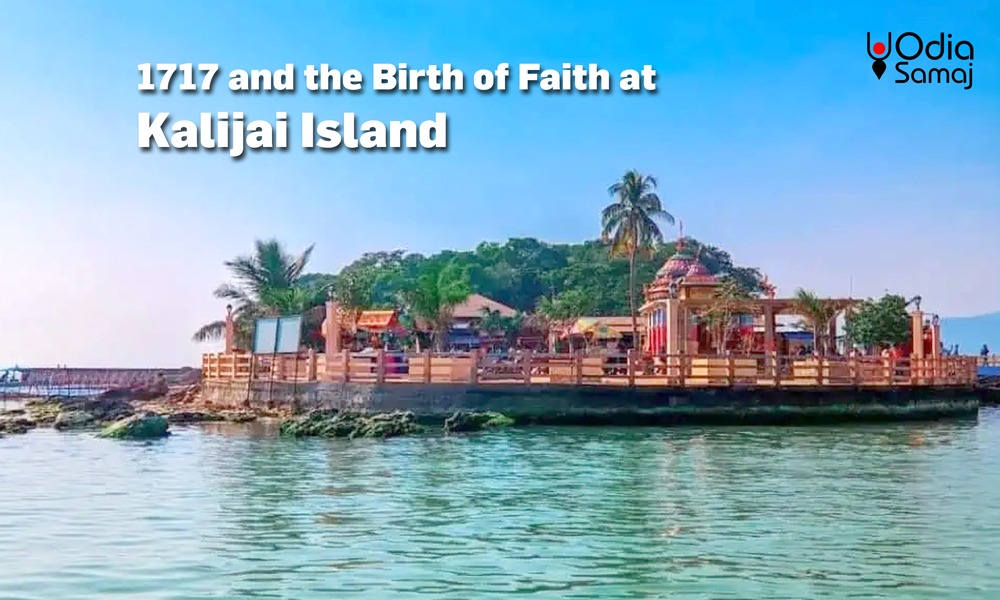
1717 and the Birth of Faith at Kalijai Island
Where loss, belief & water shaped a
living devotion
There are places
where faith arrives through celebration.
And then there are places where faith is born from silence.
Kalijai Island
belongs to the second kind.
Floating quietly in
the vast expanse of Chilika Lake, this small island does not announce itself
with grandeur. It waits. Surrounded by shifting waters and changing skies, it
carries a story that began not with a miracle, but with a human loss that never
healed. In 1717, when a shrine rose here under royal command, it did not mark
the beginning of belief. It gave form to a faith that had already taken root in
the hearts of people who lived by the lake.
Kalijai is not just a
temple.
It is a memory that learned how to breathe.
Before
the Shrine, There Was a Story-
Long before stone
walls and ritual bells, there was a journey across water.
Local oral tradition
speaks of a young newly married girl named Jaai. She was travelling across
Chilika Lake to her in laws’ home, accompanied by her father and other
passengers. The lake, calm one moment, turned violent without warning. A sudden
storm rose. The boat lost balance. Water swallowed wood and fear alike.
Everyone survived.
Except Jaai.
Her body was never
found.
In a land shaped by
rivers, cyclones, and fragile boats, this was not an unfamiliar tragedy. Yet
something about her death lingered. Fishermen spoke of strange dreams. Boatmen
felt a presence while crossing that stretch of water. The lake, once feared,
began to feel watched over.
Grief slowly
transformed into reverence.
The people did not
call her a goddess at first. They spoke to her. Asked for protection.
Remembered her before stepping onto boats. Faith here was not imposed. It was
grown, quietly, like trust built after loss.
1717:
When Faith Took Form-
In 1717, Sri
Jagannath Mansingh, the Raja of Bankad, now known as Banapur, gave permanence
to this belief. A shrine was established on the island in the heart of Chilika
Lake, recognising the devotion already alive among the lake communities.
This act was
significant.
The temple did not
create the goddess.
It acknowledged her.
By placing a shrine
on the island, the king gave legitimacy to a faith born outside royal courts
and scriptures. Maa Kalijai came to be worshipped as an aspect of Goddess Kali,
powerful yet protective, fierce yet deeply maternal. Over time, she became the
guardian deity of the lake, watching over fishermen, sailors, and travellers
who depended on these waters for survival.
Kalijai Island thus
became a meeting point of folk belief and formal worship, where lived
experience shaped theology.
An
Island That Feels Watched Over-
Reaching Kalijai
Island requires a boat. This detail matters.
As one moves away
from the shore, the world begins to soften. The sound of engines fades into
water. The horizon stretches. Migratory birds glide low during winter months.
Occasionally, the lake reveals its rare dolphins, surfacing briefly before
slipping back into mystery.
Approaching the
island, the temple appears modest. There is no overwhelming scale. No
architectural excess. Yet the atmosphere is dense with feeling. People lower
their voices instinctively. Many touch the ground before stepping inside.
For locals, this is
not tourism.
It is reassurance.
Boatmen still whisper
prayers before crossing rough waters. Fishermen still believe the goddess
understands storms better than anyone else. The faith here is practical, lived,
and deeply personal.
A
Living Faith, Not a Frozen Legend-
Kalijai is not
confined to history books. She lives through routine.
Every year during
Makar Sankranti, the island comes alive with a large fair. Pilgrims arrive from
surrounding regions. Families cross the lake together. Offerings are made.
Stories are retold. What began as mourning becomes renewal.
The festival is not
loud in spirit, even when crowds gather. It carries gratitude rather than
spectacle. People come not to ask for miracles, but to acknowledge survival.
This continuity is what
keeps Kalijai relevant. She is not worshipped because she is distant or divine
alone. She is revered because she understands vulnerability.
Between
Nature and Belief-
Kalijai Island exists
in a delicate balance between nature and devotion.
Chilika Lake is
unpredictable. Weather shifts quickly. Winds rise without warning. Locals know
this. That is why the goddess is not imagined as separate from the lake, but as
part of it. Water here is not just geography. It is emotion, livelihood, and
memory.
This is why visiting
Kalijai Island feels different from visiting mainland temples. The journey
itself becomes part of the prayer. The boat ride demands attention, patience,
and respect for nature. Faith here is inseparable from responsibility.
Why
Kalijai Still Matters?
In a time where
belief often seeks validation through scale and spectacle, Kalijai offers
another path.
She reminds us that
faith does not always begin in temples. Sometimes it begins in loss. Sometimes
it grows from fear. Sometimes it survives because people need something gentle
to hold onto while facing forces larger than themselves.
Kalijai Island stands
as a testament to Odisha’s ability to absorb pain and transform it into
protection. It reflects a culture where belief is shaped by lived realities
rather than imposed narratives.
Visiting
With Awareness-
Kalijai Island
welcomes visitors throughout the year, though winter months offer calmer waters
and richer natural sights. Boats operate from places like Barkul and Balugaon.
Safety, weather awareness, and respect for local practices are essential.
This is not a place
to rush.
It is a place to
observe how faith sits quietly beside water, how stories survive without being
written, and how devotion can grow without demanding attention.
A
Closing Thought-
Kalijai was not born
from victory.
She was born from absence.
Yet centuries later,
she remains present.
An island holds her
name.
A lake carries her memory.
And every journey across these waters continues a conversation that began in
1717, when faith found the courage to take shape.
Some gods arrive
through scripture.
Others arrive through silence.
Kalijai arrived
through the water.
Recent Post
ସୁନ୍ଦରଗଡ଼ର ଖଣ୍ଡାଧାର , ଘୋଡ଼ା ଲାଞ୍ଜ ପରି ଦିଶୁଥିବା ଝରଣା!

ଓଡ଼ିଶା ଜନଜାତି ସଂସ୍କୃତି ଓ ବିଶ୍ୱାସର ନିଆରା ପରମ୍ପରା
May 11, 2026
Delving Into Odisha’s Indigenous Straw Art
May 6, 2026