
August 8, 2026
Amruta Keli of Remuna: History, Faith and the Sweet Legacy of Lord Gopinath's Favourite Bhoga
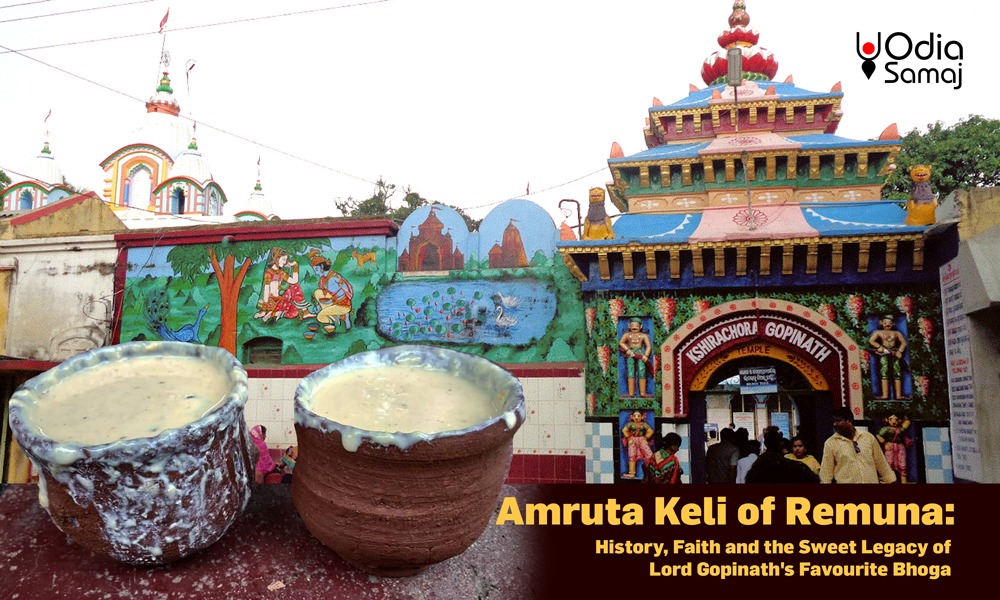
Where devotion, tradition and a timeless offering continue to unite generations
A
Sweet Offering That Became Part of Odisha's Spiritual Memory
Some
sacred traditions are preserved through scriptures. Others survive through
rituals. A few continue through something as simple, yet profound, as a bowl of
sweetened milk.
Amruta
Keli belongs to that rare category.
Prepared
daily and offered to Lord Gopinath at Remuna in Balasore district, Amruta Keli
is far more than a temple delicacy. It is one of the most cherished offerings
in Odisha's Vaishnav tradition, carrying centuries of devotion, cultural
continuity, and a sweet
legacy that continues to inspire generations.
For
countless devotees, the name Amruta Keli evokes not only the taste of a sacred
preparation but also a story that has travelled across centuries. It brings
together faith, humility, divine grace, and a living tradition that continues
to occupy a special place in Odisha's spiritual and cultural landscape.
Today,
Remuna remains one of the most important pilgrimage destinations in Odisha,
largely because of this unique bond between faith and offering. More
importantly, it remains a place where a sweet
legacy continues to be lived rather than merely remembered.
Remuna
and the Sacred Presence of Lord Gopinath
Located
near Balasore in northern Odisha, Remuna is home to the revered Gopinath
Temple, one of the most significant Vaishnav shrines in eastern India.
Dedicated to Lord Krishna in the form of Gopinath, the temple has attracted
devotees, pilgrims, and spiritual seekers for centuries.
The
temple occupies a unique place in Odisha's religious heritage. It is not only a
centre of worship but also a living reminder of how devotion continues to shape
cultural memory across generations.
While
the temple itself holds deep historical and spiritual significance, one
tradition has become inseparable from its identity.
That
tradition is Amruta Keli.
Ask
devotees about Remuna, and the conversation almost inevitably turns towards the
sacred bhoga associated with Lord Gopinath. Over time, this offering has grown
into a sweet legacy
that extends beyond the temple precincts and into the collective memory of
people who continue to cherish Odisha's enduring spiritual traditions.
What
Exactly Is Amruta Keli?
Amruta
Keli is a traditional milk-based sweet preparation made primarily from milk,
sugar, and aromatic ingredients, slowly cooked until it reaches a rich and
creamy consistency.
Unlike
ordinary sweets, its preparation follows temple traditions that have been
preserved over generations.
The
name itself carries deep symbolism.
"Amruta"
refers to nectar, the divine substance associated with immortality in Indian
tradition.
"Keli"
may be understood as a delightful preparation or offering.
Together,
the name conveys the idea of a nectar-like delicacy worthy of being offered to
the divine.
Even
today, Amruta Keli is prepared according to established temple customs before
being offered to Lord Gopinath and later distributed among devotees as prasada.
Its
significance lies not merely in its ingredients or flavour but in the devotion
with which it is prepared. That devotion forms the very foundation of the sweet legacy associated
with Amruta Keli.
Why
Is Amruta Keli Associated So Deeply with Lord Gopinath?
The
answer lies in one of the most beloved episodes in the Vaishnav devotional
tradition.
The
story centres around the saint Madhavendra Puri, a revered spiritual figure
whose teachings and devotion later influenced the Gaudiya Vaishnav tradition.
According
to devotional accounts, Madhavendra Puri arrived at Remuna during his
pilgrimage journey.
While
observing the offerings made to Lord Gopinath, he became curious about the
preparation of Amruta Keli. His curiosity was not driven by personal desire.
Instead, he wished to understand its taste so that a similar offering could be
prepared for Lord Gopal, whom he worshipped elsewhere.
Realising
that even this thought might be considered a personal desire, he quietly left
the temple without expressing it to anyone.
That
night, according to tradition, Lord Gopinath responded to the sincerity of the
saint's devotion.
It
is believed that the deity hid a pot of Amruta Keli behind the altar and
appeared in the temple priest's dream, instructing him to deliver it to
Madhavendra Puri.
The
priest later discovered the hidden offering exactly as described.
This
extraordinary event earned the deity a title that remains famous to this day.
He
came to be known as Kshira
Chora Gopinath, meaning "Gopinath who stole sweet rice for
his devotee."
For
devotees, this episode is not merely a miracle story. It represents a profound
spiritual idea: that genuine devotion reaches the divine even when left
unspoken.
It
is this deeply cherished tradition that transformed Amruta Keli into a sweet legacy of faith,
remembered and retold across generations.
The
Cultural Significance of Amruta Keli in Odisha
The
significance of Amruta Keli extends far beyond the temple walls of Remuna.
Like
many enduring traditions of Odisha, it survives not because it is preserved in
records alone, but because it continues to live in devotion, memory, and
everyday practice.
Across
Odisha, temple offerings are rarely viewed as food alone. They carry stories,
beliefs, local histories, and emotional connections that bind communities to
their cultural roots.
Just
as Mahaprasad forms an inseparable part of the spiritual identity of Puri,
Amruta Keli has become an inseparable part of Remuna's identity.
For
many families, receiving this sacred bhoga is not simply a ritual act. It is
participation in a tradition that has been passed down through generations.
The
offering has become a bridge connecting the past and the present, carrying
forward a sweet legacy
that reflects how faith, food, and cultural memory continue to remain
intertwined in Odisha's lived heritage.
Why
the Tradition Continues to Matter Today!
In
an age of rapid change, traditions survive only when communities continue to
find meaning in them.
Amruta
Keli remains relevant because it represents something deeper than ritual
continuity.
It
embodies devotion expressed through service.
Its
preparation requires patience, discipline, care, and reverence. These qualities
reflect a broader spiritual philosophy where ordinary acts become sacred
through intention.
The
tradition also demonstrates how cultural heritage can remain alive without
becoming static.
Every
day the offering is prepared.
Every day it is placed before the deity.
Every day devotees receive it with the same reverence that has existed for
centuries.
In
this continuity lies its enduring strength. The sweet legacy of Amruta Keli survives not
because it belongs to the past, but because it continues to hold meaning in the
present.
Remuna
as a Living Pilgrimage Destination
Today,
Remuna attracts pilgrims, spiritual seekers, and visitors interested in
Odisha's rich religious heritage.
The
Gopinath Temple continues to serve as an important centre of Vaishnav devotion.
Beyond its rituals and architecture, it offers something increasingly rare in
the modern world: a living connection to centuries-old traditions that remain
actively practised.
Visitors
come not merely to observe history but to become part of it.
Receiving
Amruta Keli as prasada transforms a historical narrative into a personal
experience of devotion.
This
is one reason why Remuna occupies such a respected place in Odisha's sacred
geography. Every visit becomes part of the sweet legacy that continues to define the
spiritual character of the place.
More
Than Tradition, A Reflection of Odisha's Cultural Continuity
Across
Odisha, many traditions have travelled through centuries not because they were
protected by power or preserved in archives, but because people continued to
carry them forward through faith and practice.
Amruta
Keli is one such tradition.
In
every offering made at Remuna, there remains a quiet connection between
generations. The same devotion that inspired pilgrims centuries ago continues
to inspire devotees today.
This
continuity reflects something larger than a temple custom.
It
reflects the ability of Odisha's cultural traditions to remain relevant while
staying rooted in their original spirit.
The
story of Amruta Keli reminds us that heritage is not only found in monuments,
manuscripts, or historical records. It is also found in traditions that
continue to be practised with sincerity and devotion.
Conclusion:
More Than a Sweet Offering
Amruta
Keli is often described as Lord Gopinath's favourite bhoga.
That
description is true.
Yet
its significance extends much further.
It
represents a meeting point of faith, memory, devotion, and cultural continuity.
It tells a story where a simple offering became part of spiritual history and
where divine affection for a devotee evolved into a tradition remembered
centuries later.
In
many ways, Amruta Keli reflects the enduring spirit of Odisha itself. Deeply
rooted in tradition, rich in cultural meaning, and carried forward through
generations not merely because it is old, but because it continues to matter.
Some
legacies are preserved in monuments.
Some are preserved in manuscripts.
And
some continue to live quietly in a bowl of sweet rice offered with devotion
before Lord Gopinath.
That
is the true sweet legacy
of Amruta Keli: a legacy that continues to nourish faith,
memory, devotion and cultural continuity across generations.
Recent Post
The Neelkanth: Odisha's Blue Treasure of Nature
ଓଡ଼ିଆ ସାମ୍ବାଦିକତାର ଦୀପସ୍ତମ୍ଭ ଉତ୍କଳ ଦୀପିକା
August 5, 2026
Niladri Bije and Odisha’s Sweetest Lesson in Love
July 25, 2026

ଭକ୍ତି, ଐତିହ୍ୟ ଓ ପରମ୍ପରାର ରଥଯାତ୍ରା
July 21, 2026

ପୁରାତନ ପରମ୍ପରାରୁ ପ୍ରେରଣା ସାଜିଛି 'ତୁମ୍ବା'
July 8, 2026