

June 6, 2026
Suna Besha Of Lord Jagannath Rescheduled In Puri As Blood Moon Lunar Eclipse Coincides With Dola Purnima
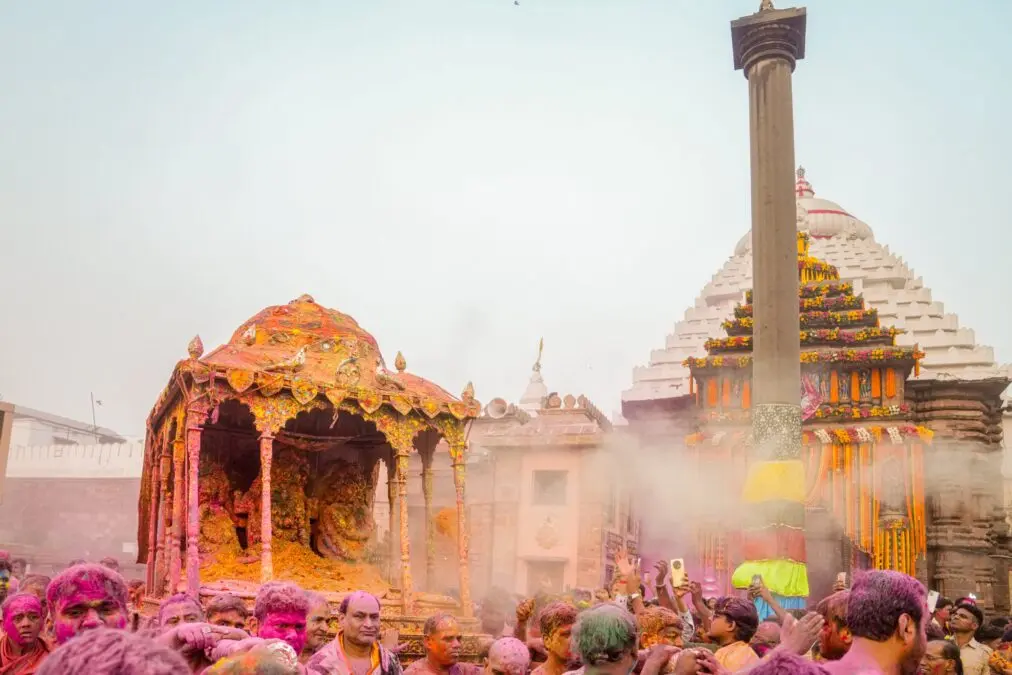
A rare celestial event has led to significant ritual adjustments at the sacred Shree Jagannath Temple as a total lunar eclipse, popularly known as the Blood Moon, coincides with the auspicious festival of Dola Purnima in Odisha. The eclipse began at 3:20 pm and concluded at 6:47 pm, lasting approximately three hours and twenty-seven minutes. Although the full eclipse unfolded during the afternoon, visibility in India commenced around moonrise at 6:26 pm, with peak totality observed between 6:33 pm and 6:40 pm when the moon appeared reddish in color.
The timing of the eclipse had a profound cultural and religious impact across Odisha, as it overlapped with Dola Purnima, a festival dedicated to Lord Krishna marked by vibrant processions, rituals, and traditional swings known as dolas. In accordance with age-old customs, temples observed the Sutak Kaal, an inauspicious period that begins hours before an eclipse. During this time, temple doors were closed and regular rituals were suspended to prevent the influence of negative energies traditionally associated with eclipses.
At the Jagannath Temple in Puri, daily rituals and the preparation of Mahaprasad were halted from sunrise until the conclusion of the eclipse. Temple sources confirmed that the doors were opened at 1 am to complete scheduled rituals in the early hours. However, Devaniti or daily ritual practices remained suspended from 6:08 am onward in strict adherence to established customs. The temple was set to reopen only after the Sarvamoksha ritual, a purification ceremony performed following the eclipse. Servitors explained that since the eclipse was considered Ketu grasta, influenced by the shadow planet Ketu, sacred niti procedures required modification.
One of the key highlights affected by the celestial event was the Rajadhiraj Besha, popularly known as Suna Besha of Lord Jagannath. The grand adornment ceremony was rescheduled to take place in the evening between 8 pm and 9:30 pm to ensure compliance with ritual norms. Despite the suspension of certain temple activities, the Chalanti Pratima continued with Dola Purnima observances. After receiving the Agyan Mala of Lord Jagannath, Dola Gobinda, along with Bhudevi and Sridevi, proceeded to the Dolabedi in the Mani Bimana. As per tradition, the deities participated in symbolic play with abir and phagu in the presence of devotees, maintaining the festive spirit of Dola Purnima.
The impact of the eclipse extended beyond Puri. In Sambalpur, the revered Maa Samaleswari Temple closed its gates early in the morning with priests citing Sutak Kaal as the reason for suspending darshan. Similarly, the Akhandalamani Temple in Bhadrak remained shut for thirteen hours until 6:47 pm and reopened only after the completion of purification rituals.
The convergence of a spectacular Blood Moon lunar eclipse with the sacred celebrations of Dola Purnima created a unique blend of astronomy and spirituality in Odisha. While devotees witnessed a rare cosmic phenomenon, temple authorities ensured that centuries old traditions and ritual purity were upheld with meticulous care, reflecting the deep cultural significance of both the eclipse and the worship of Lord Jagannath in Puri.
Leave a reply
Your email address will not be published. Required fields are marked *
Recent Post
ଅଧ୍ୟୟନ ପରିପ୍ରେକ୍ଷୀରେ ବଣ୍ଡା ସମ୍ପ୍ରଦାୟ
ସୁନ୍ଦରଗଡ଼ର ଖଣ୍ଡାଧାର , ଘୋଡ଼ା ଲାଞ୍ଜ ପରି ଦିଶୁଥିବା ଝରଣା!
May 22, 2026

ଓଡ଼ିଶା ଜନଜାତି ସଂସ୍କୃତି ଓ ବିଶ୍ୱାସର ନିଆରା ପରମ୍ପରା
May 11, 2026