

May 22, 2026
Odisha’s First Smart Village Kusunpur Under CSIR Initiative Boosts Sustainable Rural Growth
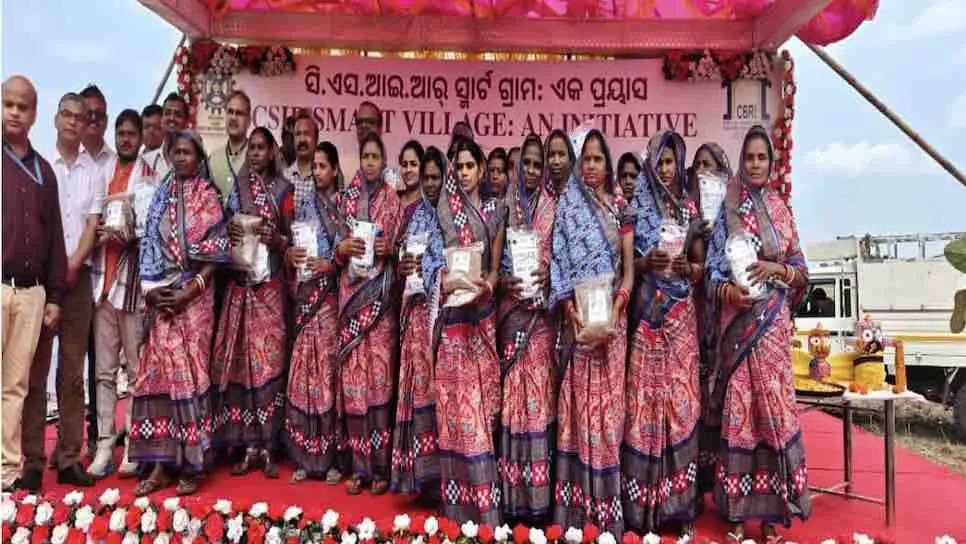
Odisha has taken a significant step towards sustainable rural development as Kusunpur village in Kendrapada district has been selected as the state’s first Smart Village under the initiative of the Council of Scientific and Industrial Research. The project, launched on March 16, reflects the broader national vision of Viksit Bharat 2047 and highlights a mission driven effort by the Ministry of Science and Technology to transform rural India through innovation and technology integration.
Kusunpur, located in the Rajnagar block, is a small coastal village with around 130 to 135 families and a population of approximately 700 to 738 people. Despite its modest size, it has been identified as a key model for implementing scientific solutions aimed at improving livelihoods, infrastructure, and environmental sustainability. The initiative positions Kusunpur as a live laboratory where practical innovations will be tested and refined before being replicated across other regions.
The CSIR has selected six villages across India for this ambitious Smart Village programme, including Bhada in Gujarat, Chumathang in Leh Ladakh, Joharat in Assam, Janakpur in Madhya Pradesh, Sawaipura in Rajasthan, and Kusunpur in Odisha. These villages, chosen in 2025 from diverse climatic zones, will serve as testing grounds for solutions in agriculture, nutrition, rural empowerment, waste management, and advanced infrastructure. The project follows a Lab to Land approach, ensuring that scientific research directly benefits rural communities.
The inauguration event was attended by Kendrapada Collector Raghuram R Iyer as the chief guest along with senior scientists such as Ramanuj Narayan, Director of CSIR IMMT Bhubaneswar, and Pradeep Kumar Ramancharla, Director of CSIR CBRI Roorkee. During the event, a detailed project report for Kusunpur was unveiled and an exhibition showcased cutting edge technologies from various CSIR laboratories aimed at improving rural life.
A dedicated team of scientists has already begun conducting surveys in the village to understand local challenges and identify opportunities for targeted interventions. Collaborations among multiple CSIR institutions will address a wide range of development areas. CSIR CBRI will focus on climate resilient infrastructure such as schools, anganwadi centres, and community sanitation facilities. CSIR CLRI will introduce skill development programmes in leather products made from fish and chicken waste along with ethnic textile training to boost local livelihoods. Other initiatives will focus on improved paddy storage systems, sustainable agriculture, and overall economic upliftment.
Local voluntary organisation Nature’s Club is supporting field research and community engagement, ensuring that the development process remains inclusive and participatory. According to officials, innovations from CSIR laboratories across the country will be implemented in Kusunpur over the next three years, with successful outcomes expected to serve as scalable models for rural transformation nationwide.
Director Ramanuj Narayan emphasized that the concept of a Smart Village goes beyond digital connectivity and includes knowledge sharing, education, skill development for women and youth, and long term economic empowerment. Collector Raghuram R Iyer also highlighted that CSIR’s network of 16 specialised laboratories will play a crucial role in delivering solutions across sectors including agriculture and livelihoods.
In addition to infrastructure and livelihood initiatives, the project will promote environmental sustainability through waste recycling systems, plastic free campaigns, and awareness programmes. With its unique geographical setting near forests, rivers, and the sea, Kusunpur offers an ideal environment for testing region specific solutions that balance ecological preservation with development.
The Smart Village initiative in Kusunpur marks a promising beginning for Odisha, demonstrating how science driven approaches can transform rural communities into self sustainable and resilient ecosystems while contributing to the larger vision of a developed India by 2047.
Leave a reply
Your email address will not be published. Required fields are marked *
Recent Post

ସୁନ୍ଦରଗଡ଼ର ଖଣ୍ଡାଧାର , ଘୋଡ଼ା ଲାଞ୍ଜ ପରି ଦିଶୁଥିବା ଝରଣା!


ଓଡ଼ିଶା ଜନଜାତି ସଂସ୍କୃତି ଓ ବିଶ୍ୱାସର ନିଆରା ପରମ୍ପରା
May 11, 2026

Delving Into Odisha’s Indigenous Straw Art
May 6, 2026